Revenue operations · CRM and lead generation
B2B Sales Platform
One controlled flow connects prospect sourcing, CRM deduplication, enrichment, human-approved outreach, reply handling, and contract handoff across multiple APAC markets.
- Project context
- Internal project built in an in-house role at FunNow Group.
- My role
- Process mapping, product design, workflow architecture, and implementation
- Scope
- Multiple APAC markets; prospect request through qualification, outreach, CRM records, and e-signature handoff.
- Operating outcome
- Reps work from a clearer pipeline with fewer manual handoffs and market-specific rules inside a shared system.
The fragmented sales journey
Prospecting began in maps, lists, and spreadsheets. Teams then checked the CRM for existing merchants, filled missing information, prepared outreach, watched for replies, and recreated records for the next stage. The cost came from moving context between tools and relying on people to remember the full sequence.
Each market also needed its own language, sourcing, and qualification rules. A shared system had to preserve those differences while producing consistent records for sales operations and leadership.
The controlled pipeline
A structured Slack intake captures market, area, and merchant segment, then routes the request to a market-specific workflow. Candidate businesses are sourced, normalised, and checked against Zoho CRM before enrichment or outreach begins.
After deduplication, the workflow prepares missing context and draft talking points. A person reviews the batch before any external message is sent. Approved leads can enter email or WhatsApp sequences; qualified activity becomes Account, Contact, and Deal records before contract handoff.
- Deduplicate before enrichment to avoid contacting existing partners and wasting paid or human effort.
- Keep market-specific sub-workflows while writing one standard output for downstream work.
- Use the CRM as the operating record for ownership and deal progression.
Why the human checkpoint stays
Outreach carries the company’s identity and can affect an existing commercial relationship. The approval batch gives a rep one place to reject a poor match, correct context, or revise a draft before it reaches a prospect. Automation prepares and routes the work; a person owns the decision to contact.
Reps can see proposed leads, approve a manageable batch, and focus attention on follow-up once interest appears instead of trusting an invisible agent with the full funnel.
Operating outcome
The rep experience is reduced to three clear responsibilities: request a prospect batch, approve the candidates and messages, then follow up when interest appears. The supporting preparation, checks, routing, and record creation happen inside the shared flow.
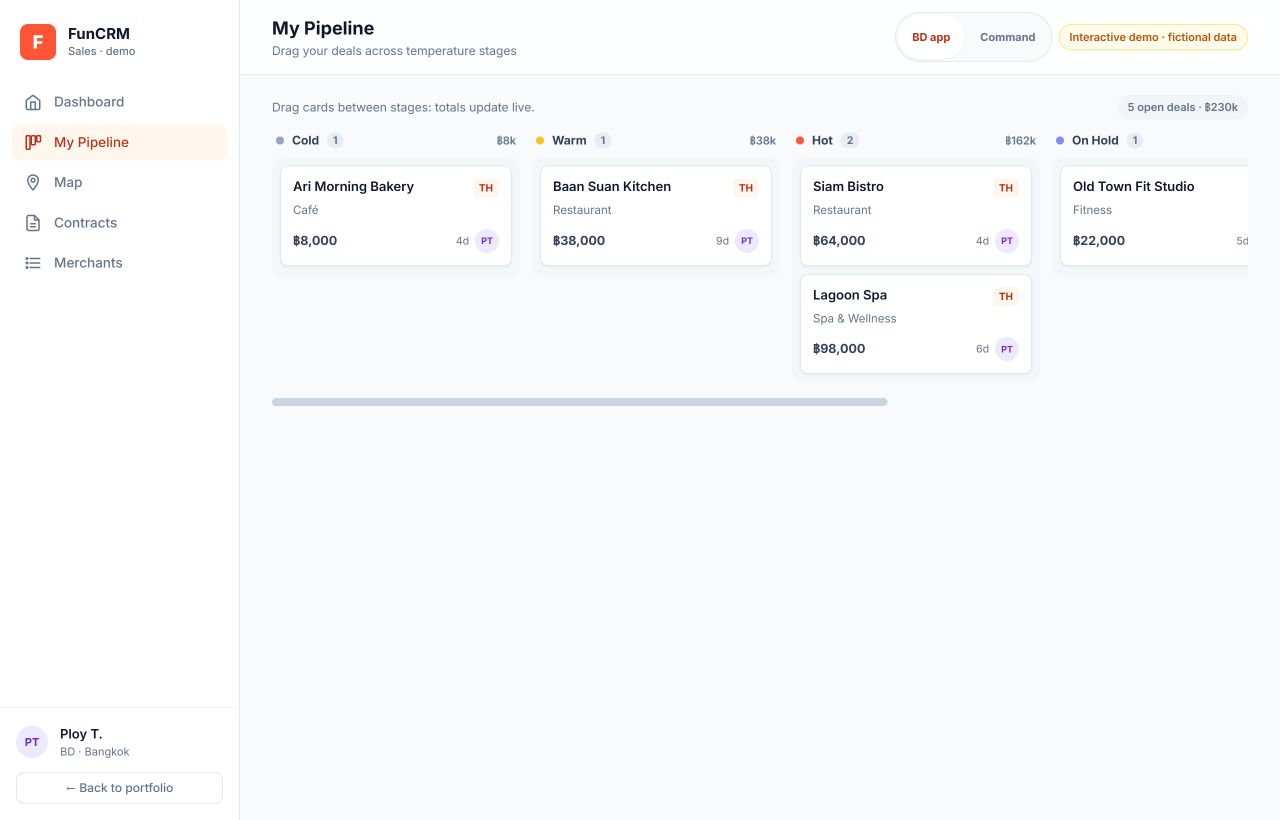
Across markets, local sourcing rules remain flexible, CRM checks happen before outreach, records follow a shared schema, and ownership becomes visible as a lead moves from cold prospect to qualified opportunity.
Failure handling and handover
The first version stored replies in a shared sheet before the CRM, and failed enrichment cases were initially too quiet. Failures now have a dedicated channel. The next improvement would send replies directly to the CRM and keep the sheet as a view, reducing the need to reconcile two records.
Handover covers the request schema, market routing, deduplication rules, approval responsibilities, destination fields, and the response path for failed jobs. Operators can diagnose and change the system without reading it node by node.
What I would carry into the next build
- Start the workflow in the channel the sales team already uses.
- Filter against the CRM before spending money or attention on enrichment.
- Keep approval, exception visibility, and record ownership explicit.
Does your team have a similar problem?
Send the current steps, the tools involved, and where work gets held up.